Flange joints
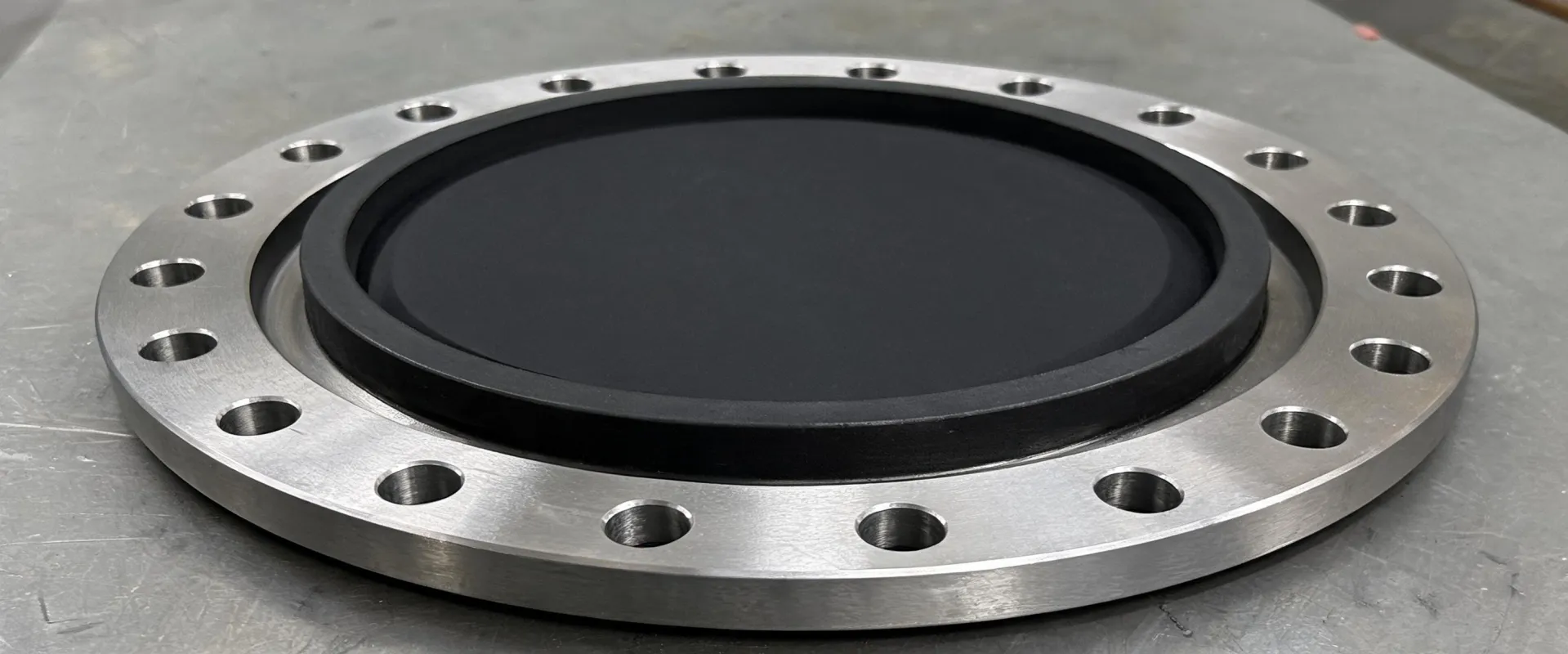
Representative part: raised-face or flat-face gasket cut from sheet or molded to a drawing.
Ask for ID/OD or ASME size reference, thickness in inches or millimetres, and compression set (%) under the named ASTM D395 condition.
GASKET RFQ / QUALIFIED BUYERS
Compare factory wholesale quotes on the same rubber gasket line
FREE specification and sourcing-requirements review
Eligible first orders may receive up to 3%
Eligibility applies to qualified business buyers and is confirmed after we review your product, quantity, destination, and sourcing requirements.
Rubber Gasket Sourcing is an independent sourcing partner. We help a purchasing team name the compound, size, Shore A hardness, quantity and destination so several factories can quote the same rubber gasket line. We do not mold parts, hold a warehouse, or publish a price list.
A flange, enclosure or pump does not buy a family name. It buys a written medium, a service temperature in °F or °C, and a size that can be checked. These six cards turn a use into purchase questions. They are not promised results.
Representative part: raised-face or flat-face gasket cut from sheet or molded to a drawing.
Ask for ID/OD or ASME size reference, thickness in inches or millimetres, and compression set (%) under the named ASTM D395 condition.
Representative part: cover gasket or stuffing-box washer.
Ask for Shore A hardness the supplier must confirm, medium (oil, water, steam), and tensile strength (MPa / psi) if the file claims it.
Representative part: lid gasket or die-cut strip.
Ask for closed-cell vs solid compound, temperature window, and whether a UL 94 note belongs to this grade or only to a neighbouring plastic housing.
Representative part: custom outline from a buyer drawing.
Ask for drawing revision, tolerance, and which ASTM D2000 callout the factory will actually certify on the lot — not on the company brochure.
Representative part: lid or sight-glass gasket.
Ask for a file that names the grade and lot under FDA 21 CFR 177 or NSF 61. A plant ISO 9001 certificate is not that file.
Representative part: EPDM-family outline for ozone or UV exposure.
Ask whether epdm rubber gasket is the same configuration as the home term, or only a different catalogue string. Ozone and UV claims stay on the named compound.
The buyer still decides compound, hardness and size. These four cards only show how factories usually group a request. They are not stocked SKUs.
Typical labels: NBR, Buna-N, oil-service gasket.
Write Shore A on the NBR scale, oil or fuel medium, and whether a neighbouring FKM line is being offered as a substitute.
Request datasheet checkTypical labels: EPDM, weather seal, steam-adjacent gasket.
Write whether epdm rubber gasket or epdm rubber gaskets names a different hardness or only a plural. Steam and oil do not share a default compound.
Compare gradesTypical labels: VMQ, FKM, high-temperature gasket.
Silicone first when the window is wide and oil is absent; FKM when hydrocarbons stay on the joint. Pay the material delta only after the medium is written.
Request datasheet checkTypical labels: custom outline, DXF, die-cut from rubber gasket sheet.
A sheet blank is not the finished part. Thickness, ID/OD and the cut file stay on the request even when the factory quotes rubber gasket sheet stock.
Compare gradesInner and outer diameter, or a standard size reference, stay the buyer's decision. A factory default "close enough" ring is a different line.
Ask the supplier to confirm Shore A hardness on the quoted compound. Do not mix Shore A with Shore D. Compression set (%) needs the ASTM D395 condition if claimed.
Service temperature in °F or °C is incomplete without the fluid or air on the joint. Heat deflection temperature belongs to rigid plastics, not to this elastomer request.
Write quantity against each configuration. Sheets on a pallet, bags of cut rings, and a single prototype are different deals even when the outline looks the same.
These three cards are worked examples. They do not name a buyer, invent a saving, or certify a factory.
A Midwest OEM needed a cover gasket that a salesman called “standard EPDM”. The brief asked for Shore A, ID/OD and steam vs oil. Two factories answered two different compounds. The quotes were only comparable after the oil line was written down as a substitution.
Scenario · Plant buyer · Pump OEM
An enclosure builder sent a photo of a round rubber gasket. The desk asked for thickness and Shore A instead of guessing a catalog ring. The photo stayed a starting point. The priced line used a drawing revision.
Scenario · Materials manager · Enclosure shop
A distributor asked whether front load washer rubber gasket mold was the same as this site’s industrial family. It is a leftover measured string. If the buyer needs an appliance bellows mold, that is a different device and a different factory list.
Scenario · Commodity buyer · Aftermarket parts
Rubber Gasket Sourcing does not issue REACH, RoHS, FDA or IATF badges. Ask the factory for the current document that names the quoted compound, hardness and lot. A company certificate is a plant claim, not a gasket claim.
SVHC statement for the named grade, if the receiving plant asked for it.
Restriction letter tied to the compound, not to the trading company.
Only when the buyer asked for food-contact and the file names the lot.
Plant system evidence. It does not replace a dimensional report.
Ask whether PPAP is in scope for this outline, then write the level.
Callout and test condition on the priced line, not on a family brochure.
Compound, thickness, ID/OD or drawing, and Shore A. Silicone gasket and rubber gasket sheet are neighbouring families. They share a desk only when the buyer writes that substitution.
Configuration, quantity by specification, destination state or postal code, requested window, documents, packing, and whether a sample must be approved first. Missing axes become silent factory defaults.
Size and compound. This desk will not fill a blank ID/OD or pick Shore A to make the form look complete.
No. We compare factory wholesale quotes and total procurement cost on the same quantity, packing and Incoterms. There is no same-basis price book on this site.
No. Ask for the lot file that cites the named ASTM method. ISO 9001 describes a system. It does not measure compression set on your ring.
Only if the factory says it is the same configuration. rubber gasket sheet and custom rubber gaskets often change thickness or the cut file. Read the companion articles before merging them.
We will line up the same axes for more than one factory. No existing quotation is required.